


Solidus Wallet · Testnet preview
Your keys. Your identity. One wallet.
A non-custodial, multi-chain wallet where your address is a name, not a hex string — with DID-guardian social recovery instead of a fragile seed phrase, and a verified identity you carry into every app. Verify once; reuse everywhere.
- Non-custodial
- 3-of-5 social recovery
- DID-native
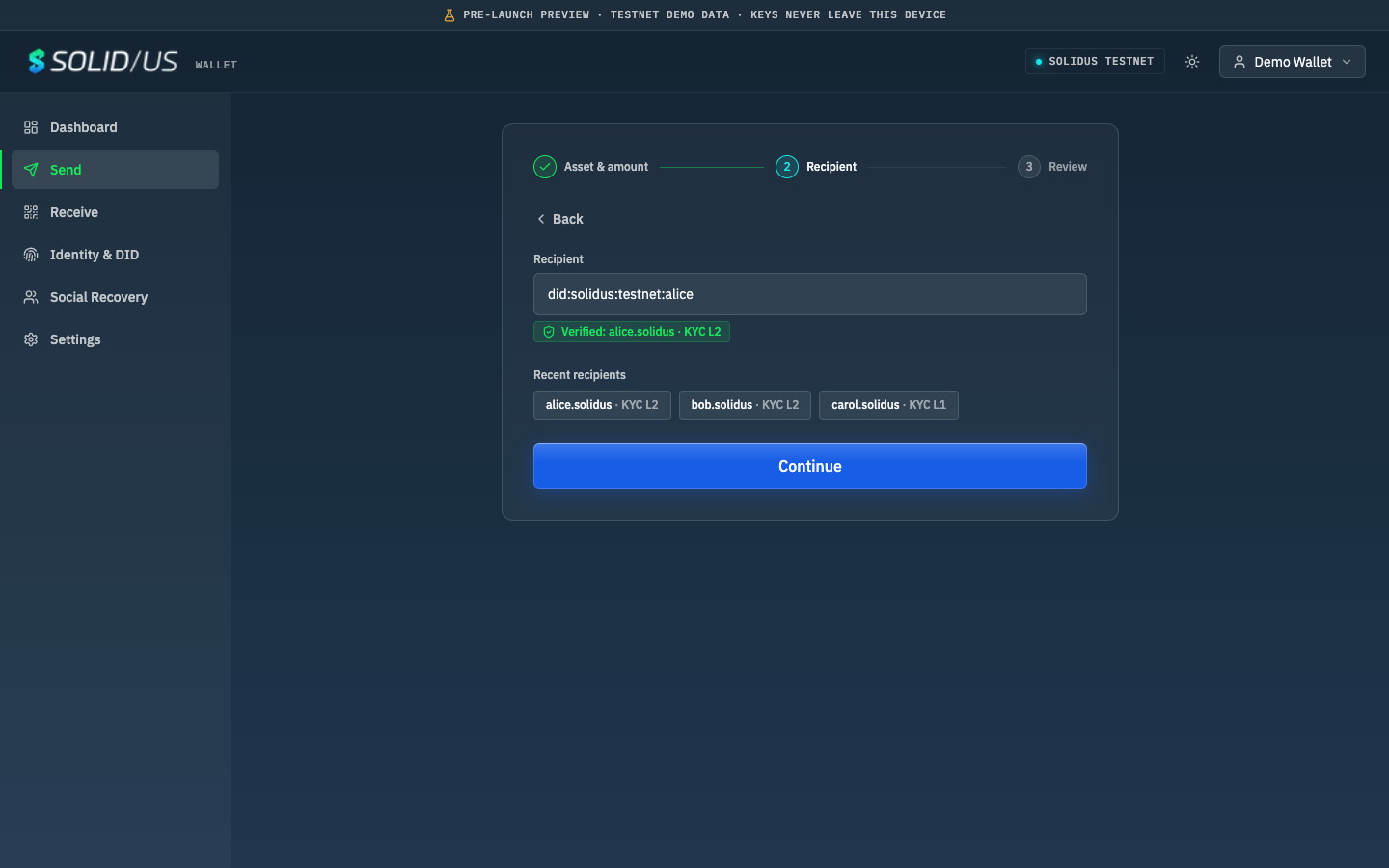
Send to a name, not a hex string.
Type did:solidus:alice and see who you are paying. The wallet resolves DIDs, ENS names, and raw addresses — and a resolved Solidus DID carries a verified badge, because there is a credentialed identity behind it, not just a saved string.
Send-to-name is not new; ENS does it per chain. The difference is one chain-neutral identity that resolves the same way everywhere — and it is the same DID that holds your credentials and names your guardians. One substrate, not three bolt-ons.
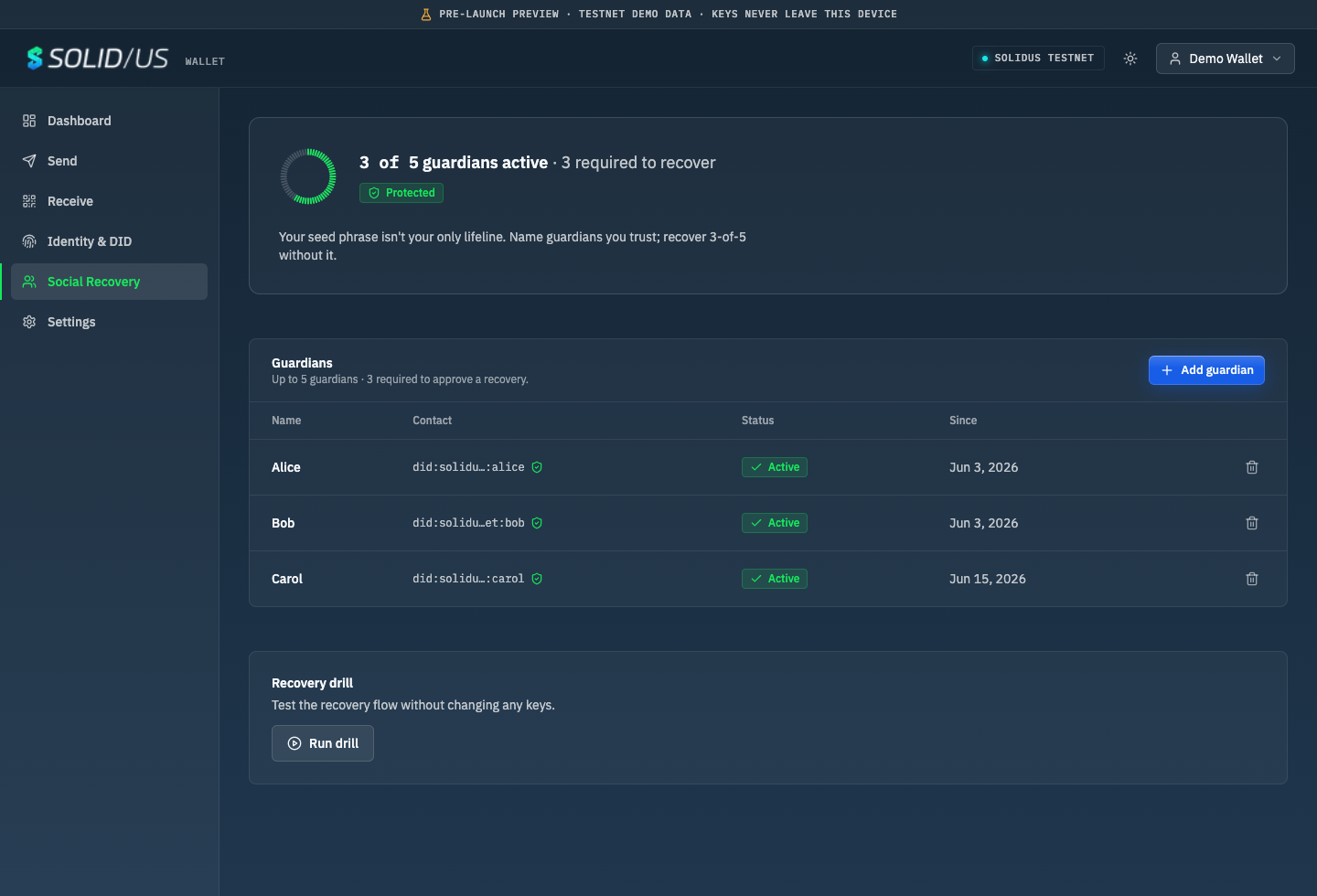
Lose your phone, keep your wallet.
The wallets most people hold are seed-only: lose the phrase, lose everything. Here you name guardians you trust by their DID; any 3 of 5 can approve recovery to a new device. Encrypted key shards, a visible threshold, and a drill you can run anytime — without touching your keys.
Honest lineage: Argent pioneered guardian recovery in 2018. We didn’t invent it — we made it DID-native and brought it to a multi-chain, self-custody wallet.
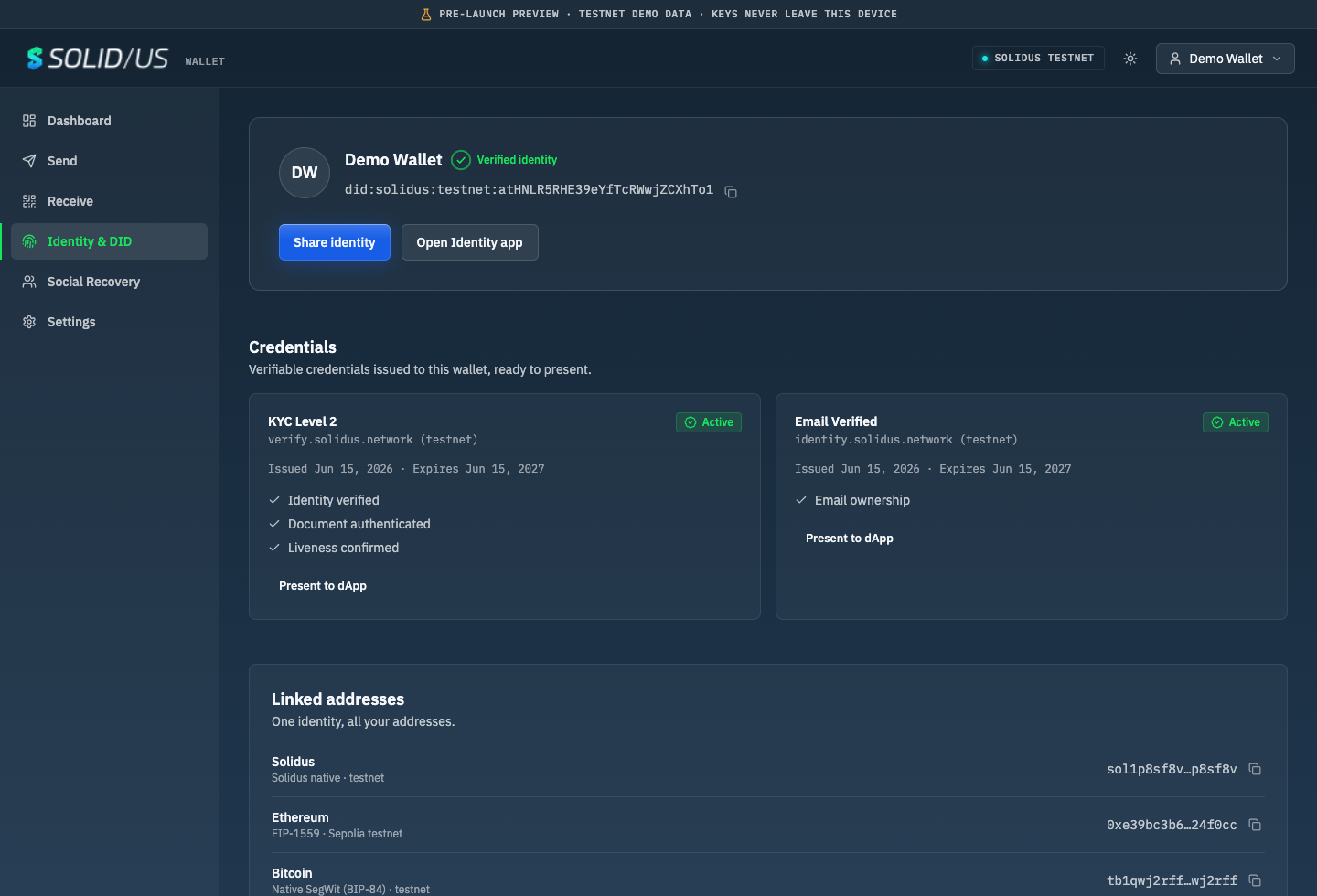
Verify once. Reuse everywhere.
The KYC credential you earn at verify.solidus.network lives in your wallet — not in a company’s database. Present it to a permissioned pool, a sign-in, or any OpenID4VP verifier without re-verifying and without leaving the app.
Selective disclosure is built in: with BBS+, prove you are over 18 without revealing your birth date. Share only what is asked — the verifier never sees your balance or your keys.
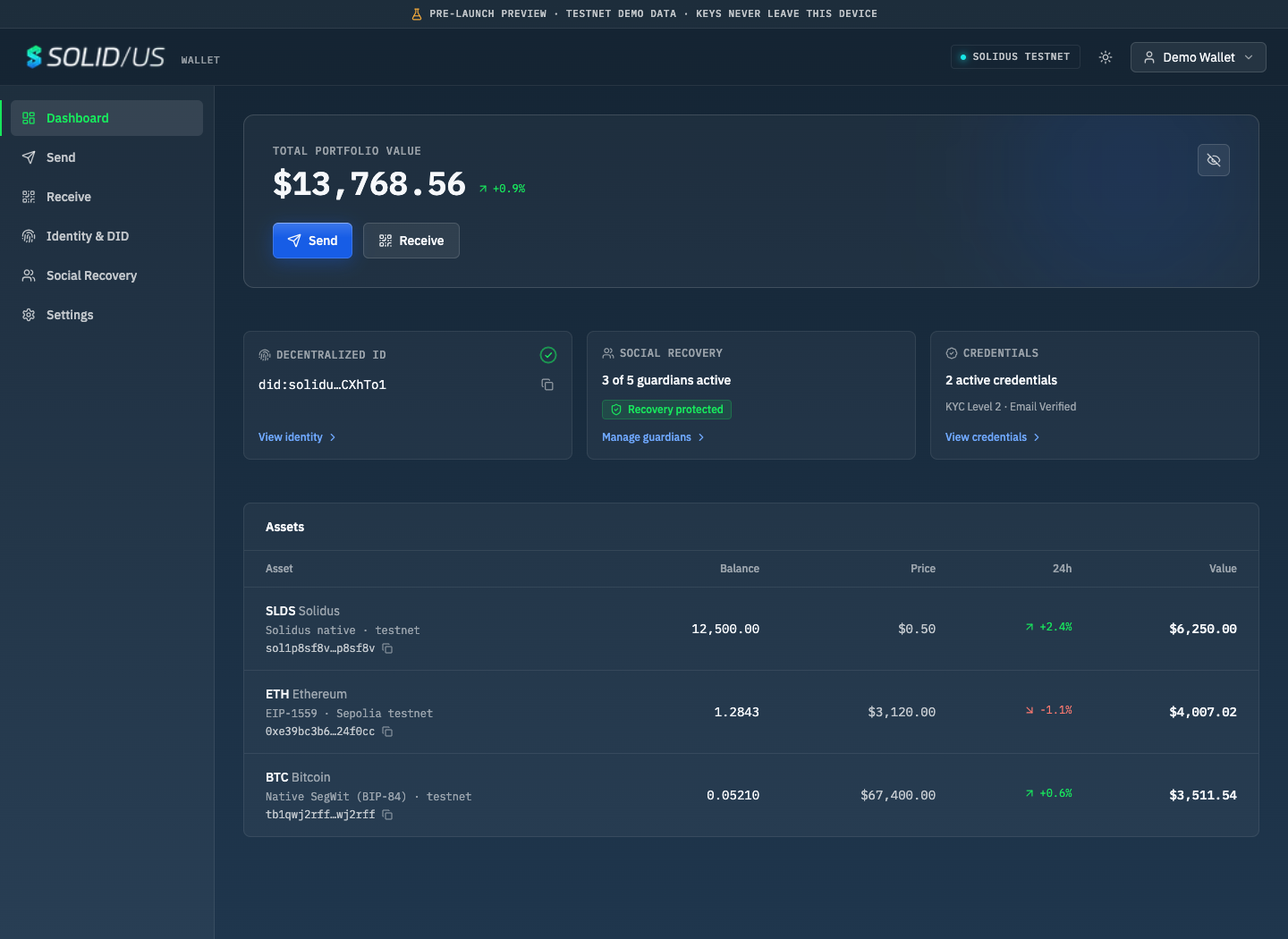
We can’t freeze, move, or lose your funds.
Because we never hold them. That sentence is the entire custody model — and it is one no embedded-wallet vendor can write.
Keys live on your device
Key generation, signing, and guardian shards run client-side — in your browser or on your phone. Nothing key-shaped ever reaches a server.
Recovery you can inspect
3-of-5 guardians you name and manage — not an opaque "recovery contact." Run the recovery drill anytime and watch the threshold work without touching your keys.
Open standards, not lock-in
W3C DID + VC 2.0, SD-JWT VC, and BBS+ selective disclosure. did:solidus is registered in the W3C DID Method Registry; Solidus is a DIF Associate Member.
Pre-launch honesty: Solidus Wallet is a testnet preview. An external security audit is the gate before public launch — it has not happened yet. Until it does, keep real funds away from it: testnet only.
Get the wallet that carries your identity.
The web wallet, live today. Native iOS and Android are not built yet — no store launch is scheduled.